India’s Unified Payments Interface (UPI) has emerged as a global model for modern payment systems, transforming the way millions of Indians transact every day. This platform has set new standards for digital financial transactions and has been a remarkable success story in India’s economic landscape.
What is UPI?
Launched in 2016 by the National Payments Corporation of India (NPCI), UPI is a digital payment system that allows users to link multiple bank accounts into a single mobile application. It supports instant fund transfers, bill payments, and merchant transactions through a seamless and secure interface.
UPI’s Major Achievements
Unprecedented Growth: UPI has revolutionized digital payments in India. In May 2024, UPI transactions set a new record with 14.04 billion transactions worth Rs 20.45 trillion. This marks a significant increase from April 2024’s 13.3 billion transactions and reflects the growing adoption of digital payments in India.
Global Recognition: India’s UPI system has garnered international acclaim, with countries like Singapore and the UAE adopting UPI-based systems for cross-border transactions.
Enhanced Financial Inclusion: UPI’s easy-to-use interface has helped millions of previously unbanked individuals access financial services, contributing to India’s drive towards a cashless economy. UPI has been instrumental in promoting financial inclusion.
Cost Efficiency: Unlike traditional banking methods that involve high transaction fees, UPI transactions are either free or have minimal charges. This affordability has been a significant factor in UPI’s success.
Success Stories and Examples
Aadhaar Pay Integration: UPI’s integration with Aadhaar Pay has allowed rural and underserved populations to make digital payments using just their Aadhaar number, further expanding UPI’s reach.
UPI Apps: Apps like Google Pay and PhonePe have leveraged UPI to offer innovative features such as cashback offers, easy bill payments, and merchant transactions. For instance, during festive seasons, these apps run campaigns that attract millions of users with cashback and discounts.
Challenges and Drawbacks
While UPI’s success is impressive, there are challenges to address:
Security Concerns: As with any digital system, UPI faces security issues such as fraud and phishing attacks. Ensuring robust security measures is crucial for maintaining user trust.
Digital Divide: Despite its success, there are still regions with limited internet access or technological literacy where UPI’s impact is less pronounced.
Regulatory Hurdles: As UPI expands globally, navigating diverse regulatory environments and maintaining compliance with international standards will be essential for sustained success.
Lessons for Other Countries
Scalable UPI Technology: UPI’s success underscores the importance of creating a scalable, user-friendly digital payment system that can accommodate large volumes of transactions.
Government Support: A key factor in UPI’s success was strong government backing. Countries looking to develop similar systems should consider establishing supportive policies and frameworks.
Innovation and Adaptation: UPI’s adaptability to user needs and technological advancements highlights the importance of continuous innovation in payment systems.
Conclusion
UPI has not only revolutionized payments in India but has also set a precedent for digital financial systems worldwide. Its success is a testament to India’s innovative spirit and provides a blueprint for other nations aiming to enhance their digital payment infrastructures. As UPI continues to evolve, it will be exciting to see how it influences global financial practices.
The Union Budget is one of the most anticipated events in the economic calendar of India. It sets the tone for the country’s financial and economic policies for the year ahead. As we approach the Union Budget 2024, there are several expectations and speculations about what it might entail. Explore the key areas to watch and what stakeholders might expect from the upcoming big event.
Taxation Policies
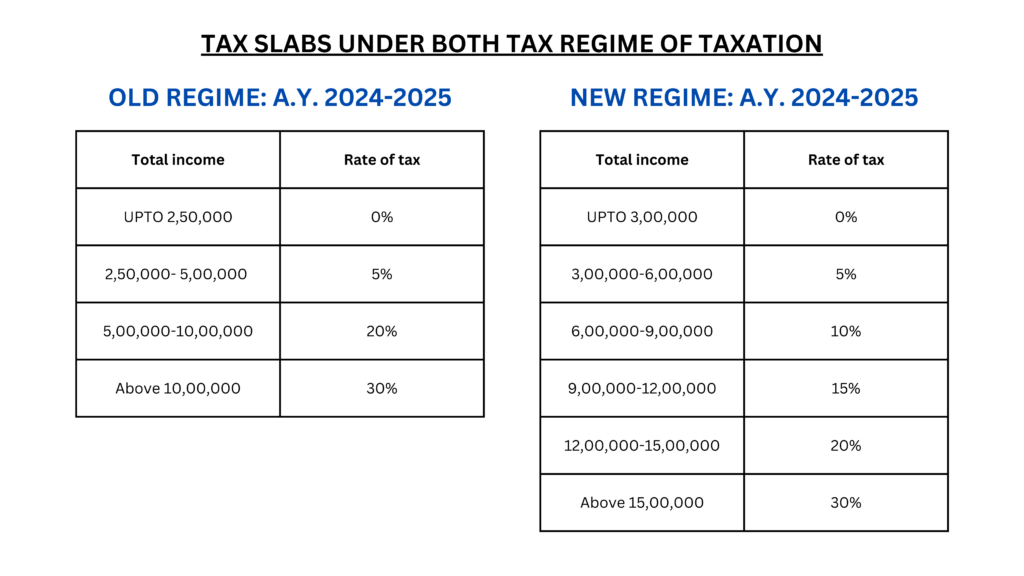
Income Tax Relief: There is widespread anticipation that the government may provide relief to individual taxpayers by adjusting tax slabs or increasing the standard deduction. Such measures could increase disposable income and stimulate consumer spending.
Corporate Taxation: For businesses, the government might introduce further simplifications in the corporate tax structure, aiming to enhance the ease of doing business. Incentives for startups and MSMEs (Micro, Small, and Medium Enterprises) could also be on the cards to foster innovation and entrepreneurship.
GST Reforms: Revisions and simplifications in the Goods and Services Tax (GST) regime are expected to address the concerns of various industries and improve compliance. The government might also consider rationalizing GST rates for specific sectors to boost consumption.
Sectoral Focus
Agriculture and Rural Development: Given the significant contribution of agriculture to India’s GDP and employment, the budget is expected to continue supporting this sector. Measures might include increased allocation for rural infrastructure, subsidies, and schemes to improve farmers’ income.
Infrastructure Development: Infrastructure development is crucial for economic growth. The budget could see increased spending on roads, railways, ports, and urban infrastructure. Initiatives like the National Infrastructure Pipeline (NIP) are likely to receive a boost.
Healthcare and Education: The pandemic has underscored the need for robust healthcare infrastructure. Increased allocation for healthcare, including public health initiatives and infrastructure development, is expected. Similarly, education could see enhanced funding for digital infrastructure and skill development programs.
Renewable Energy: With a global shift towards sustainable energy, the budget may include incentives for renewable energy projects. This could involve subsidies for solar and wind energy, as well as initiatives to promote electric vehicles and green technologies.
Conclusion
As always, the budget will be a reflection of the government’s priorities and its vision for the country’s future.
Stay tuned as the date approaches, and be prepared to analyze how the announcements align with these expectations and the broader economic goals of the nation.
The startup world comes with its own unique language packed with jargon and acronyms. Understanding the vocabulary that drives the startup ecosystem is like having a map in unknown waters—it shows the road forward in the face of doubt and ambiguity. While you don’t need to know every buzzword right away, there are some foundational startup terms and definitions that every founder should understand. Whether you’re a seasoned entrepreneur or taking your first steps into the startup world, these terms would definitely help you while pitching your startup in front of investors, understanding a pitch deck, or even understanding various metrics of your startup.
Due diligence: In the context of startup, due diligence refers to the audit of the firm conducted by angel and venture capital investors before determining whether or not to invest. Everyone who has ever watched Shark Tank or any other show where a millionaire investor puts money in businesses might be familiar with due diligence. For example, Throughout the show, investors are introduced to several firms, along with their financials and predicted growth. The entrepreneur’s presentation is polished and confident, yet it ends abruptly due to withholding crucial information. Investors typically discover a concealed debt, a pending lawsuit with a previous partner, some type of ethical concern, or some plagiarised promises to potential investors or with the goods being provided.
Runway: Runway refers to how many months your business can keep operating before it’s out of money. It’s important for sustainability and financial planning since it shows how long the company can run on its current level of money. It is determined by dividing available cash by the monthly burn rate and reflects the pace at which the startup spends money.
Net Promoter Score (NPS): A metric called Net Promoter Score (NPS) is used to gauge how satisfied and loyal customers are with a business or product. “On a scale of 0 to 10, how likely are you to recommend our product/service to a friend or colleague?” is the basic question that forms the basis of this survey. Three groups of respondents are identified: those who score 9–10, those who score 7-8, and those who score 0-6, or promoters. Subtract the percentage of Detractors from the percentage of Promoters to get the Net Promoter Score (NPS). If all respondents are Detractors, the score can be -100; if all respondents are Promoters, the score can be +100. NPS offers insightful data on overall customer happiness and loyalty, which helps companies assess their performance in comparison to rivals and pinpoint areas for development.
Gross merchandise value (GMV): GMV stands for Gross Merchandise Value. It refers to the total sales value of merchandise sold through a particular platform, marketplace, or e-commerce website over a certain period of time. GMV includes the total value of all goods or services sold, regardless of whether the platform retains a portion of the sales revenue as commission or fees. It is an important metric for evaluating the scale and growth of e-commerce businesses and online marketplaces. It’s a metric that is most commonly used in the E-Commerce industry.
Capitalization table (Cap Table): A cap table (also called capitalization table) is a spreadsheet for a startup company or early-stage venture that lists all the company’s securities, such as common shares, preferred shares, warrants, who owns them, and the prices paid by the investors for these securities. It indicates each investor’s percentage of ownership in the company, the value of their securities, and dilution over time. For investors, the cap table aids in assessing founder motivation, predicting future dilution, evaluating talent attraction, and determining investment amounts. For founders, it facilitates effective company management, guides employee option pool management, and ensures compliance for audits and future financing rounds.
For small businesses, especially Micro, Small, and Medium Enterprises (MSMEs), Goods and Services Tax (GST) compliance can be particularly daunting. Here are some of the top challenges they face along with potential solutions:
Understanding and adapting to GST Regulations
Challenge: Keeping up with the ever-changing GST regulations and understanding their implications can be overwhelming for small businesses with limited resources.
Solution: Invest in regular training and workshops for employees to stay updated on GST laws. Additionally, seek assistance from GST consultants or accounting professionals who specialize in guiding small businesses through compliance requirements.
Maintaining Accurate Records and Invoices:
Challenge: Small businesses often struggle to maintain accurate records and invoices, which are essential for GST compliance.
Solution: Implement robust accounting software tailored for small businesses that automates invoice generation and record-keeping. This not only ensures accuracy but also streamlines compliance processes.
Timely Filing of Returns:
Challenge: Meeting GST return filing deadlines can be challenging, especially when small businesses have limited staff or resources dedicated to accounting tasks.
Solution: Utilize accounting software with built-in reminders for return filing deadlines. Alternatively, consider outsourcing accounting tasks to professionals who specialize in GST compliance to ensure timely filing.
Input Tax Credit (ITC) Reconciliation:
Challenge: Reconciling input tax credit claims with vendor invoices and GST returns can be complex and time-consuming.
Solution: Implement a systematic approach to reconcile purchase invoices with GST returns regularly. Invest in accounting software that automates ITC reconciliation processes, minimizing errors and discrepancies.
Compliance with E-Invoicing and E-Way Bill Requirements:
Challenge: Adhering to e-invoicing and e-way bill requirements mandated by GST authorities can be challenging for small businesses, particularly those with limited digital capabilities.
Solution: Invest in e-invoicing and e-way bill generation software or platforms that integrate seamlessly with existing accounting systems. Additionally, seek training and guidance from GST professionals to ensure compliance with electronic invoicing and transportation document regulations.
Resource Constraints:
Challenge: Small businesses often lack dedicated staff or resources to handle GST compliance effectively.
Solution: Consider outsourcing GST compliance tasks to specialized accounting firms or consultants. Alternatively, invest in user-friendly accounting software specifically designed for small businesses, which can streamline compliance processes and reduce the burden on internal resources.
(MSMEs) play a crucial role, contributing a substantial 29% to the GDP. Despite their significance, these enterprises often face challenges in maintaining high-quality standards, minimizing waste, and staying competitive in a rapidly evolving market.
To support these vital businesses, the Indian Government introduced the Zero Defect- Zero Effect (ZED) scheme. This initiative, which emerged from Prime Minister Narendra Modi’s “Make in India” vision, aims to elevate MSMEs by focusing on two crucial aspects: Zero Defect and Zero Effect.
Zero Defect signifies a commitment to producing flawless goods, ensuring they meet stringent quality standards and reducing the need for costly rework or returns. This boosts customer satisfaction and lowers production costs, making businesses more efficient.
Zero Effect tackles the environmental impact of manufacturing. By encouraging practices like efficient energy use, waste reduction, and responsible waste management, ZED certification helps MSMEs operate sustainably. This not only benefits the environment but also cuts operational expenses, enhancing profitability.
The ZED certification is structured into three levels: Bronze, Silver, and Gold. Each level recognizes different degrees of excellence in quality and sustainability practices. MSMEs registered under the UDYAM platform are eligible for ZED certification, which is valid for three years.
Benefits of ZED Certification:
Enhanced Product Quality: By focusing on quality control, MSMEs can reduce defects, improve brand reputation, and increase customer satisfaction.
Sustainable Manufacturing: Practices encouraged by ZED certification lead to reduced waste, lower energy consumption, and effective resource management, which translates into lower operational costs.
Financial Support: Certified MSMEs can receive financial incentives for technology upgrades and consultancy support, further empowering them to excel in their industries.
In conclusion, ZED certification is not just a recognition of quality and sustainability but also a pathway for MSMEs to thrive in a competitive global market. It supports economic growth, enhances operational efficiency, and underscores India’s commitment to sustainable development.
For MSMEs looking to elevate their standards and gain a competitive edge, ZED certification offers a clear roadmap towards excellence in manufacturing and environmental stewardship. It’s a testament to India’s vision of promoting innovation, efficiency, and sustainability across industries.
New ideation-stage startups are exciting, but often they overlook the critical aspect of market research. Market research is the systematic gathering and analysis of data about buyers and the market, providing inferences about the target market, competition, and industry dynamics, crucial for sustainable growth and profitability. By employing techniques such as surveys, focus groups, and data analysis, startups can collect valuable feedback to guide their decisions, ensuring that their offerings align with customer needs.
Effective Market Strategies:
Understanding the Target Market: It helps startups determine optimal pricing, distribution channels, and effective marketing strategies, enhancing customer satisfaction and loyalty.
Validating Business Ideas: Market research reduces the risk of failure and increases the chances of building a feasible and profitable business model.
Investor Appeal: Solid market research enhances by demonstrating an understanding of the market and readiness for success.
Comprehensive Market Research: provides insights into competitor strategies, pricing, and customer engagement, aiding in developing competitive advantages and refining value propositions.
Informed Decisions: It enables data-driven decisions, reduces reliance on intuition, and identifies potential roadblocks and market saturation to mitigate risks.
Better Product Development and Positioning: Market research aids in aligning offerings with customer desires, ensuring a competitive edge through continual improvement.
For better understanding, here are some real-life scenarios like Tune In Hook Up, a video dating site that struggled with traffic. Market research revealed a need for easy video sharing, leading to its rebranding as YouTube. In another instance, Odeo, a podcast platform by Evan Williams and Biz Stone, faced competition from Apple. Insights from market research on user dissatisfaction with content-sharing platforms led to its transformation into Twitter, focusing on simplicity and real-time updates, achieving massive success.
Thereby in the dynamic business world having conducted strong market research becomes indispensable for startups and they can make informed decisions, adapt to changing market trends, and ultimately carve out their place in the co
The tax system that existed before the implementation of the new regime is the old tax regime. To design an efficient salary structure and pay minimal tax, employees have an option to choose between the old and new tax regime every financial year.
Benefits of opting for the new tax regime:
If Employees have a total income up to Rs. 7,50,000/- (after claiming a standard deduction of Rs. 50,000/- and rebate u/s 87A of Rs. 25,000) which becomes the tax-free income threshold under the new regime, it makes practical sense for employees earning up to 7.5 lakhs to explore the benefits of the new tax regime where the employees do not have any deductions or allowances available to claim
A lower surcharge rate is offered under the new tax regime i.e. 25% as compared to old tax regime i.e. 37% for an income slab of Rs. 5 crores & above.
Deductions/exemptions available under old regime but will not be available in new regime are:
Interest on home loan (self-owned) [maximum deduction=Rs.2,00,000]
Professional tax
House Rent Allowance ( HRA )
Leave Travel Allowance ( LTA )
Deduction on health insurance premium u/s 80D
Deduction u/s 80C
Employee’s contributions to NPS account u/s 80CCD(2B)
Exemptions for free food and beverages through vouchers/food coupons
Deduction u/s 80TTA interest on deposits in savings account
Deduction u/s 80TTB interest on deposits with a banking company ( for senior citizens)
Deduction u/s 80CCH
But what if employees have a total income of more than 7,50,000/- ?
For employees with an income exceeding Rs. 7.5 lakhs, the decision of which tax regime to opt for requires careful consideration of various factors and would depend upon case to case. Now, if the total income is more than Rs. 7,50,000/- there are certain allowances and deductions (other than the standard deduction and rebate) that are available only in the old tax regime, and the employee can claim the benefit of the same, and increase their breakeven threshold of paying NIL tax.
CONCLUSION:
Both the old and new tax regimes possess advantages and disadvantages. The previous tax structure encourages taxpayers to cultivate a habit of saving, while the new tax structure favors employees with lower earnings and investments, resulting in fewer deductions and exemptions. However, due to the unique nature of individual deductions and exemptions, a thorough comparison of the two regimes is necessary to determine the best fit for each person. The new income tax regime is designed to accommodate those who prefer minimal deductions or wish to avoid the burden of extensive tax preparation. This includes non-salaried taxpayers, such as consultants, who are not eligible for Section VIA exemptions and deductions. Conversely, senior citizens, who derive a substantial portion of their income from interest, can benefit from the newly introduced Section 80TTB, which allows them to claim Rs.50,000 as interest income deduction. Therefore
Three Things are permanent in life: Death, Taxes and Surprises in Indian Elections. After 7 phases, 6 weeks and around 640 million votes counted, the world’s largest democracy threw some big surprises. Meanwhile, the Indian stock markets also reacted to each and every happening of the Election Phase; be it the Exit Polls, vote counting or the final results. Let’s dive deeper into understanding the implications of elections on the markets and economy as a whole.
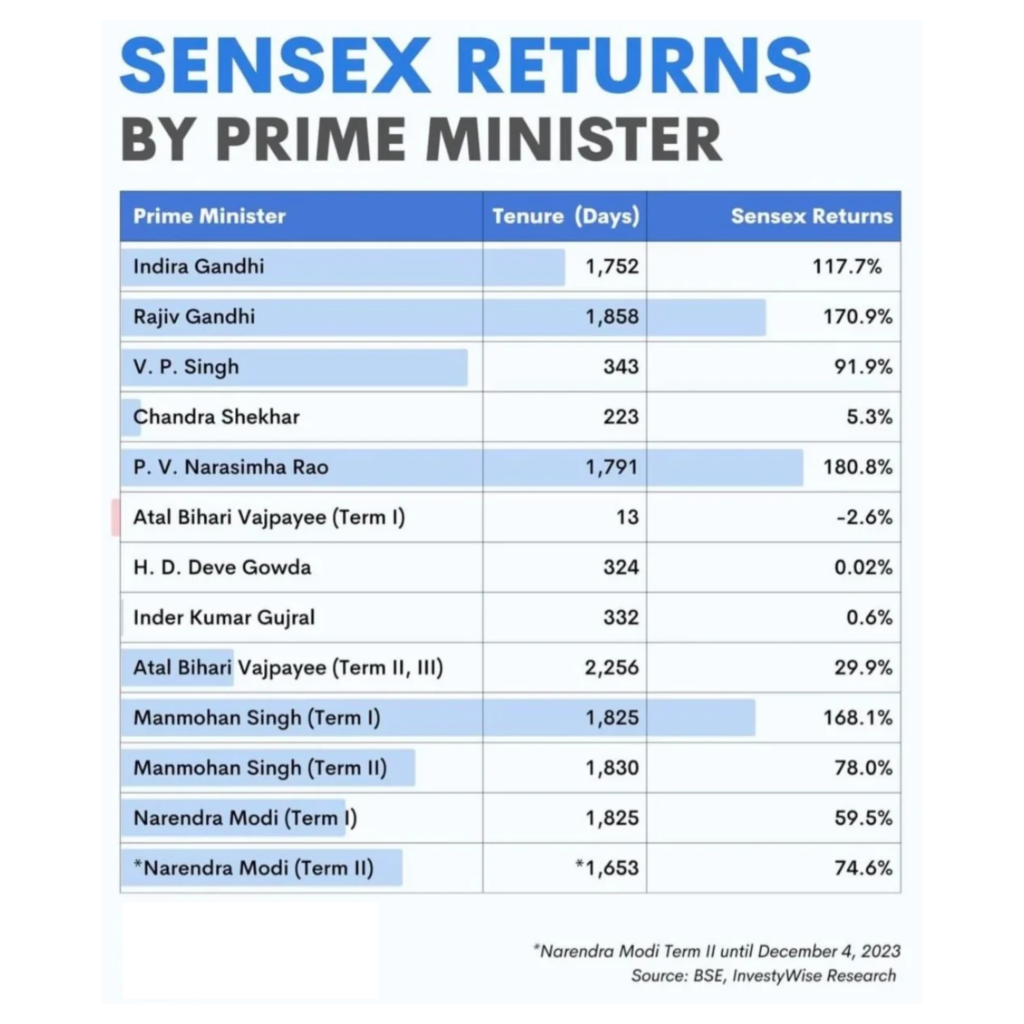
Changes in governments or political parties and ideologies can cause changes in government policies, economic priorities, and regulations, affecting various sectors and companies. While elections create short-term volatility, the long-term effects are mostly shaped by the economic reforms and policies implemented by the ruling party. So, it has been seen that the markets react positively when it is likely to be certain that the ruling party will continue for the next term as well.
Now, let us take a look at the history, how did the Indian Benchmark Index Sensex fare in the tenure of different Prime Ministers:
Retail investors, often exhibit herd behavior, following trends rather than conducting a thorough analysis. So, they react to every event that may potentially affect the markets. For example, if a contesting party promises to slash tax rates in their election manifesto and the majority of its policies are directed towards economic development, the likelihood of its win might lead to a rise in stock prices. Similarly, if a party with vague and unclear promises shows signs of winning the election, it will create negative market sentiments and lead to a plunge in share prices.
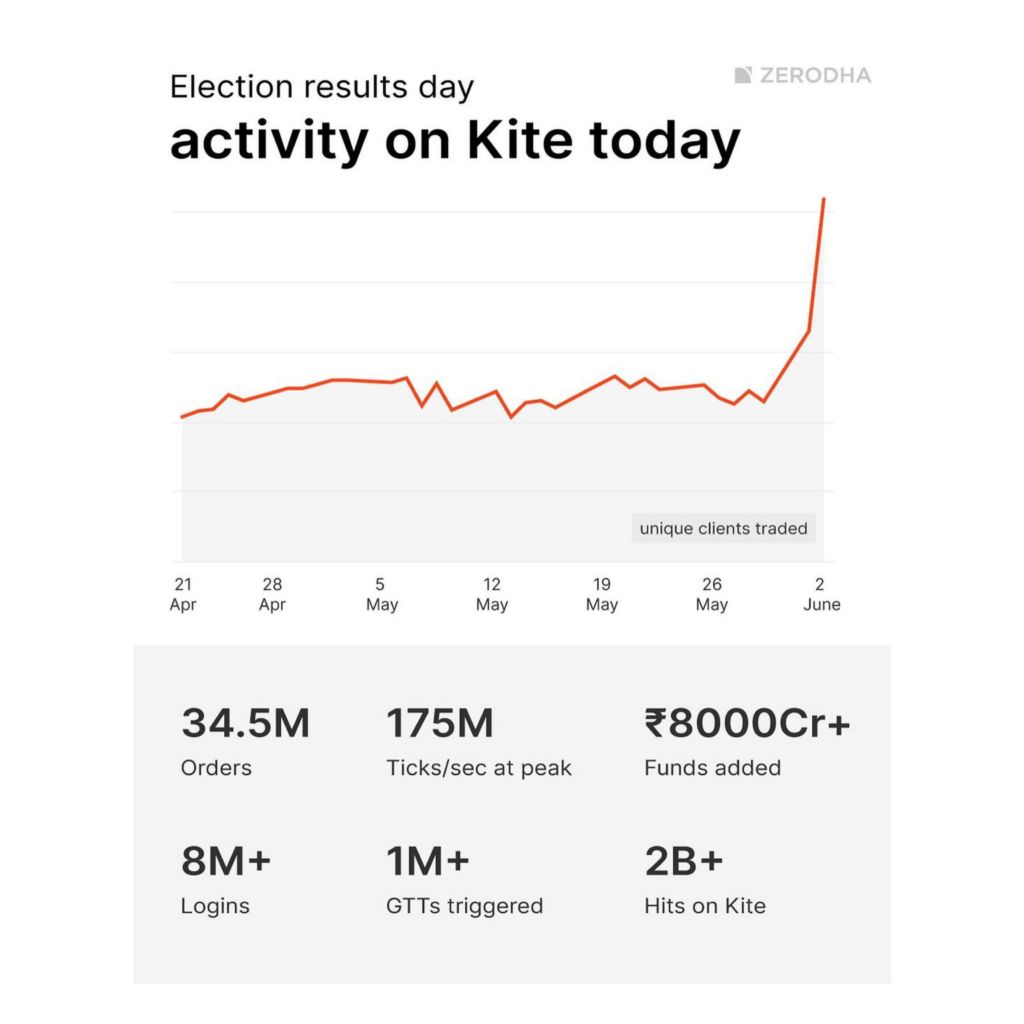
Let’s have a quick look at the recent scenario in the stock market amidst the Lok Sabha Elections. After the conclusion of the elections on 1st June, the exit polls were declared by various media agencies on 2nd June. The exit polls predicted a clear victory for NDA with around 370-380 seats and they were on the track to their “400 Paar” slogan. Reacting to the same, Nifty 50 opened at a gap-up on the following day and touched its all-time high, and also the Nifty PSE Index gained around 8%. Simultaneously, all other indices also celebrated the possible victory of the NDA.
However, on the result day, as the counting of votes started, the result did not meet expectations which led to a bloodbath in the entire market on 4th June with Nifty 50 falling around 6%. However, this did not last long as the markets rebounded very quickly post-results as the final result was the same as the market expected though the seats were fewer (Remember: a win is always a win)
In conclusion, it is clear that the market is made up of the sentiments of lots of retail investors and is very sensitive towards each and every thing affecting the economy. However, the overall ‘India Growth Story’ is still prevalent and it seems that the market will continue its uptrend in the days to come. So, continue to grab the opportunities when the markets dip and keep holding fundamentally sound stocks.
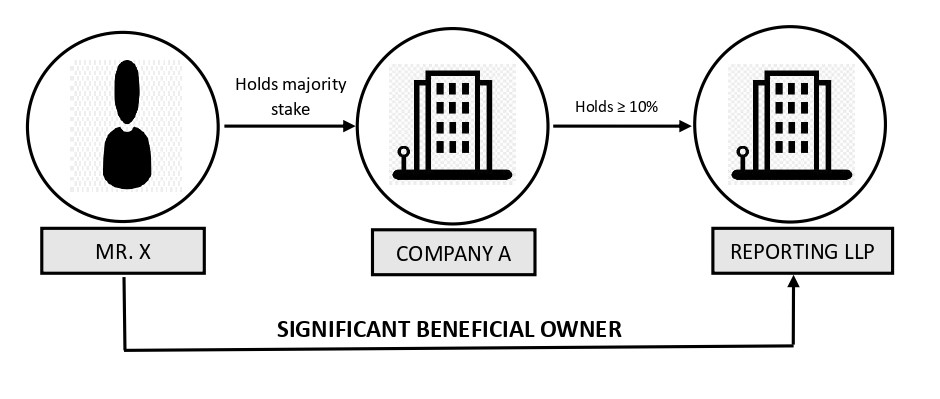
Limited Liability Partnerships (LLPs) are now required to adhere to new compliance measures involving Significant Beneficial Owners (SBOs). A “reporting LLP” refers to a limited liability partnership required to comply with the requirements of section 90 of the Companies Act, 2013, as modified by the notification. An SBO, in relation to a reporting LLP, is an individual, who acting alone or together or through one or more persons or trusts, holds indirectly or together with any direct holdings at least ten percent of the contribution, voting rights, or distributable profit. They are the crucial players who shape the direction and decisions of the LLP.
For Example: If Mr. X holds shares of more than 50% in A Limited and A Limited holds more than 10% voting rights in the reporting LLP, then Mr. X is exercising Significant Beneficial Ownership in the reporting LLP. The graphical presentation of the above example is as follows:
Compliance Steps
The Limited Liability Partnership (LLP) must take necessary steps to identify any individuals who are significant beneficial owners in its structure.
If an individual is identified as a significant beneficial owner, they must provide a declaration in Form No. LLP BEN-1 to the reporting LLP.
Upon receiving the declaration from the significant beneficial owner(s), the LLP must submit the information to the Registrar in Form No. LLP BEN-2 within 30 days of receiving the declaration.
The LLP shall maintain a register of significant beneficial owners in Form No. LLP BEN-3.
The LLP shall issue a notice in Form No. LLP BEN-4, seeking information in accordance with sub-section (5) of section 90, as applied to LLPs by the relevant notification.
Impacts of SBO Declaration:
SBO declarations have profound impacts on promoting transparency, influencing corporate governance, enabling comprehensive disclosures, and reinforcing compliance. It helps to understand the actual individuals who control or benefit significantly from the firm, promoting better decision-making and accountability. The SBO declaration is not merely a regulatory checkbox but a legal mandate. Non-compliance could lead to penalties, reinforcing the integrity of the financial system.
The extension aligns LLPs’ SBO framework with that of companies, aiming to expose complex networks used to conceal ownership. This combats money laundering and terrorism financing. SBO declarations play a crucial role in preventing financial crimes, acting as a deterrent and enabling early intervention.
In conclusion, embracing Significant Beneficial Owner declarations isn’t just a regulatory necessity; it’s a shared commitment to fostering transparent, accountable, and responsible business environments. By navigating the seas of compliance, LLPs contribute to a stronger financial ecosystem, reinforcing integrity and trust.
No travel agency will take you to this route but here’s how we travelled Switzerland with 25+ cities in 11 Days including 4 Boat Cruises for a total price of Rs. 90,000 for family of 2 Adults and 2 Kids using the Swiss Travel System.
Swiss Travel Pass gives you access to unlimited travel by Trains, Trams, buses, and Boats and selected Cogwheel railway too, and entry to 500+ museums.
We bought 2 Adults 15 days Pass for 45k each and we got a Family Card for Free which gives free travel to children less than 16 years and includes free access to excursions like Titlis, and Glacier 3000 too with a paying adult.
Tip: Download the SBB app from the Playstore/ Apple store.
Travel agencies will not suggest this as they have to accommodate a bigger group so they cannot risk one person being late or missing the train.
But the beauty of Swiss Travel is that they are most punctual, are at regular intervals, and are designed meticulously so that interconnecting trains are almost waiting for you on opposite platforms.
Switzerland Day 1-
We selected Lausanne as the Base city for 3 days.
We went to Zermatt which is a beautiful car-free city and you will find beautiful Chalets all around.
Additionally, you can either visit Matterhorn ( Toblerone mountain), or Gornergrat but I would recommend Gornergrat as here, the train will pass through the snow-clad mountains which will be an additional 29 CHF two-way with a 50% discount due to the Swiss Pass.
Day 2 –
We went to Gstaad which is a resort town for celebrities alongside cities of Zweisimmen and Saanen.
In 1995, Dilwale Dulhania Le Jayenge happened, and the economy boomed.
Many scenes from DDLJ were shot here and you can easily find the Café “Early Beck”
Zweisimmen is the station where Simran misses her train to Zurich. The kiosk where she buys the cowbell is still there right next to the station
Saanen railway station was the location for the scene in the movie where Raj and Simran wait to catch the next train to Zurich. The bridge next to the station was the location for the “palat” scene.
Tip: You can board a Panoramic Goldenpass train from Montreux which has a more scenic route. Reservation is optional and mostly you will get a seat easily without reservation. So the Swiss Pass covers more than 10+ Panoramic trains as well.
Day 3 –
We went to the Olympic museum in Lausanne wherein the entry ticket of 2k is included for Free on the Swiss Pass.
We also did a 2.5-hour cruise which is again Free with Swiss Pass and walked along the lake towns of Montreux and Vevey along Lake Geneva.
Imagine, all these towns are developed on mountains but so developed that you will find long Trams running at diagonally elevated heights across the mountains.
Day 4 –
It was a Day to change the Base to Mierengen which was a perfect base to explore places near Interlaken. It is 22 min from Interlaken but you can get properties at almost 1/3rd of rates from main tourist areas like Interlaken or Lucerne
On the same day, we also did another Boat cruise from Lake Brienz to Interlaken again Free with a Swiss Pass which according to me is the most beautiful lake with turquoise blue waters in Switzerland amongst Lake Lucerne, Lake Zurich, Lake Geneva, Lake Thun, etc.
Tip: SBB has a unique service to transfer luggage at 12 CHF per luggage from one town to another. Although costly, I would recommend using this if we analyze our per day cost which goes wasted while we checkout from one hotel, change cities, and check in at another hotel, here you will have hands-free while intercity travel so can visit many small towns in between by Hop on – Hop off any train.
Day 5 –
I always felt Jungfrau – the Top of Europe as a bit overrated for the cost of 9k per person so we decided to ascend to a less touristy but much more beautiful mountain Mannlichen.
Männlichen is a mountain in the heart of the Jungfrau Region with a 360° view. It’s one of the best viewpoints for the famous Eiger, Mönch and Jungfrau.
The journey till Interlaken- Lauterbrunnen – Wengen even though Cogwheel train is covered by Swiss Pass We took a Cable Car from Wengen to Mannlichen and then took a Gondola from Mannlichen to Grindelwald and the excursion was opened just today for Summer 2024. The total cost for a family of 4 was just Rs.7000 for two way ride.
This Cable Car has an upgrade option to the Royal Experience with a Balcony seat for only 5 CHF where you seat on the cable car roof in open for a thrilling experience!
Day 6–
We took a train to Capital city Bern which is like one hour from Interlaken.
Many do not consider Bern as travel city in Switzerland but I really liked the cobble-stoned Old town of Bern with boutique shops. We got a second hand shop wherein all good Board Games were at 5 CHF.
You cannot miss the Clock towers and the two main shopping streets of Kramgasse and Gerechtigkeitsgasse are in the center of the Old Town. The UNESCO World Cultural Heritage Site is lined with six kilometers of arcades that invite visitors to enjoy a special kind of shopping experience.
You will find Trams running along the city which is again Free with Swiss Pass.
Day 7–
This is like a Hidden Gem I am going to share!
– Take a Train to Luzern – 1 hour – Take a scenic Boat Cruise to Vitznau from Pier 1 – 1 hour – Board Europe Oldest Cogwheel railway to Mt Rigi – 40 min and behold!
On May 21, 1871, Europe’s first mountain railway departed on its inaugural ascent from Vitznau to Rigi Staffelhöhe – a milestone in the history of Mount Rigi.
Today, Mount Rigi and its cogwheel railways presents itself as a unique mountain railway paradise and all this again included in Swiss Pass without a single penny extra.
Day 7 continued…
Descend from the other side to Zurich via Arth Goldau and visit the iconic Lindt Chocolate Factory!
The children will love the Chocolate Tour at Lindt. You will also love the Lindt Hot Chocolate at Cafe.
This way you save a day by taking two different routes to ascend and descend.
We also visited Zug and Zurich HB. In Zurich, we simply sit in any Tram , go 3 stops and come back or get down if we see anything interesting.
Tip : Book Lindt Chocolate Tour in advance as they have fixed slots. Cost – Rs. 1.5k pp
In Pics : Check out how a 2 Year Old teaching Life Lessions to her 5 month sibling! Thats what travelling gives which schools cannot!
Food options –
Well, we are still 2 Days to go with all your best wishes and many surprises on the way. For those asking for Lunch Options – 1. Lausanne – Shanti – Indian 2. Gstaad – Mango – Indian 3. Bern – Tibis – Pure Vegan – Pay as per weight 4. Zermatt – Golden India – Indian 5. Mereingen – Hotel Sherlock Homes – Run by Indians Made Pure Jain food for us
And as Gujaratis – Ghar ka Khana Thepla, Khichdi Locho, Home made Nachos. We bring vegetables from Coop or Migros and cook one time (also helps to save cost) or manage breakfast.
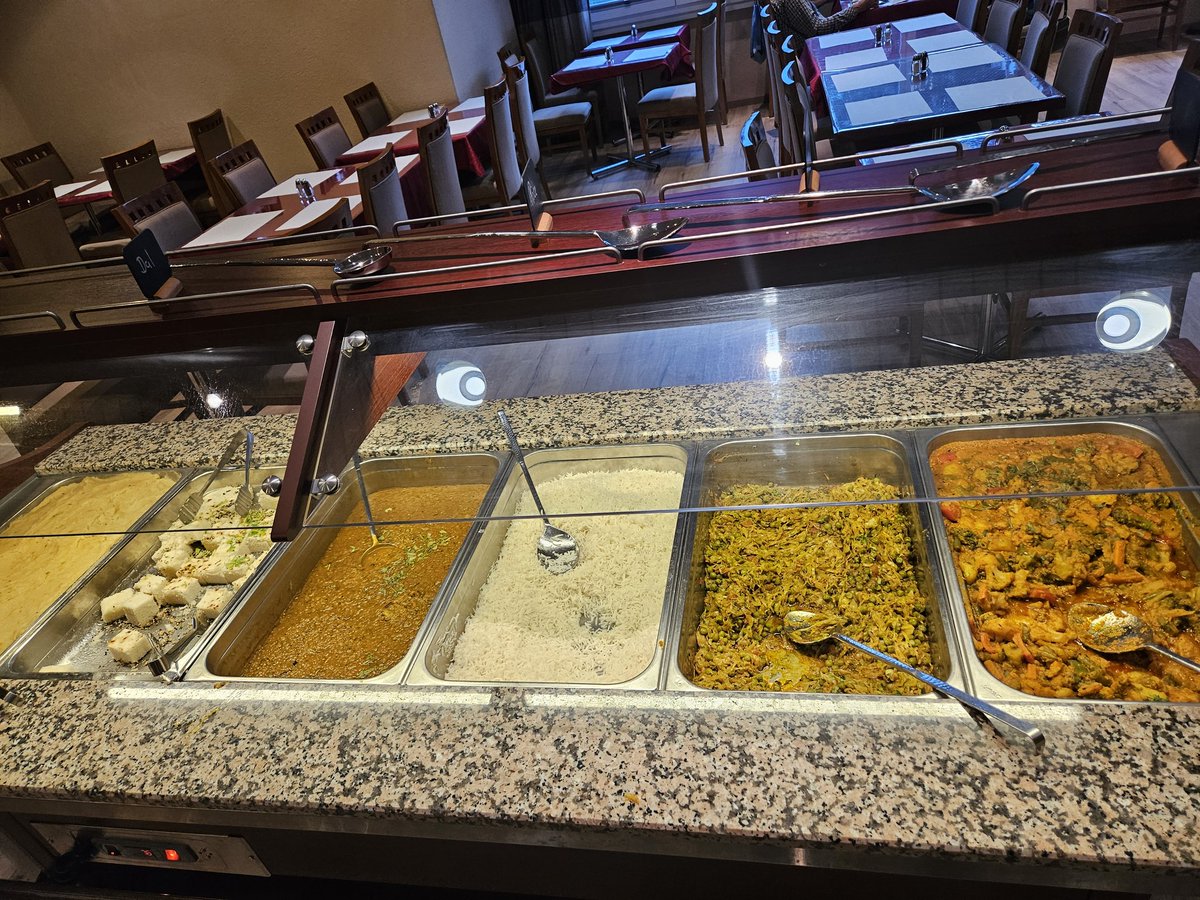
In Pics : Pure Jain Buffet ,My daughter enjoying first rains after dinner at Shanti restaurant, our Kitchen !
Yes, I love to plan travel as a hobby and always use Public transport as it helps dwell deep into the culture of the city.
I also agree that sometimes overplanning kills the surprise element while you may enjoy going with the flow but I also love to write and share my experience on travel and the response is overwhelming!
Also Kudos to my 3 Siblings; we studied and grew up together and our respective wives; this is our first trip and that too with 6 Kids of Age 5 months to 8 years.















 +91 97234 00220
 support@counselvise.com