- Mobikwik
- Zoomcar
- Gaming like houseparty and psych
- Raymond
- Reliance Jio provides work from home plan
- Aarogya Setu
- Thoughtful Human
- 3D Hubs
This article focuses on provisions of The Income Tax Act, 1961 and rules made there under relating to Set Off and Carry Forward of Losses.
Adjusting of income under one head against the loss under another head is called setoff. This is done to arrive at taxable /total income.

Various provisions are as follows:
Section 70: INTER SOURCE ADJUSTMENT (INTRA HEAD ADJUSTMENT)
SECTION 70 deals with the set off of loss from one source against income from another source under the same head of income, subject to following exceptions:-
example:- loss of one self occupied property can be set off against income of let out property
SECTION 71:- INTER HEAD ADJUSTMENT
Where in respect of any assessment year, the net result of any head of income is a loss; the same can be set off against the income under any other heads for the assessment year, subject to following exceptions:
exapmle:- Losses in one business can be set off from profits in another business – CIT v/s Muthuram Chettiar (1962) 44 ITR 710(SC).
SECTION 71 B: LOSS UNDER HEAD ‘INCOME FROM HOUSE PROPERTY’
Loss under the head ‘income from house property’ can be carried forward and can be set off against income under the same head only.
Period for which carry forward shall be allowed: 8 assessment years immediately succeeding the assessment year in which such loss is first computed.
example:- loss from one sold out house can be set off against other income of let out house.
SECTION 72: CARRY FORWARD AND SET OFF OF BUSINESS LOSS OTHER THAN SPECULATION LOSS
Loss under the head ‘profits and gains of business or profession’ (OTHER THAN SPECULATION LOSS) can be carried forward and set off against ‘business profit’. For this purpose business profit includes profits derived from a business activity but assessable under the heads other than ‘profits and gains of business or profession’
Period for which carry forward shall be allowed: 8 assessment years immediately succeeding the assessment year in which such loss is first computed.
example:- loss of car business can be set off and carried forward against profits of computer business
SECTION 73:- : CARRY FORWARD AND SET OFF OF SPECULATION LOSS
Losses from speculative transaction/business can be carried forward & set off against income from speculative business only.
Period for which carry forward shall be allowed: 4 assessment years immediately succeeding the assessment year in which such loss is first computed.
example: If a speculator believes XYZ Company stock is overpriced, they may short the stock, wait for the price to fall, and make a profit. The loss incurred for the time being can be set off against such speculative activities only.
SECTION 73 A:- : CARRY FORWARD AND SET OFF OF SPECIFIED BUSINESS
Any loss, computed in respect of any specified business referred to in section 35 AD shall not be set off except against profits and gains, if any, of any other specified business.
Period for which carry forward shall be allowed: An infinite year till the loss is not set off.
example:-loss from laying and operating a cross-country natural gas pipeline network for distribution can be set off against such specified business only.
SECTION 74:- : CARRY FORWARD AND SET OFF OF CAPITAL LOSS
Losses under the head ‘capital gains’ can be carried forward and set off against income under the same head, subject to restriction that the loss on transfer of long term capital assets can be set off only against long term capital gain.
Period for which carry forward shall be allowed: 4 assessment years immediately succeeding the assessment year in which such loss is first computed.
example:- Miss Seema purchases a building in January 2014 and sells it in January 2015, holding it for just a year, making it short term capital asset. On sell it was a short term capital loss which can be set off against long term capital gain, if any.
SECTION 74 A:- : CARRY FORWARD AND SET OFF FROM ACTIVITY OF OWING AND MAINTAINING RACE HORSES
Losses under the activity of owing and maintaining horses can be set off against profits of the same activity only.
Period for which carry forward shall be allowed: 4 assessment years immediately succeeding the assessment year in which such loss is first computed
| Types of Losses | Intra Head Adjustment | Inter Head Adjustment | Carry Forwarded | Brought Forward Losses to be Set Off against | Time Limit to carry forward | Man datory filing of return of income |
| Loss from House Property | Allowed | Allowed, upto Maximum of Rs. 2,00,000 from AY 2018-19 | Allowed | Income from House Property | 8 Years | No |
| Loss from Speculative Business | Only against Speculative business income | Not Allowed | Allowed | Income from Speculative Business | 4 Years | Yes |
| Loss from Specified Business | Only against Specified business income | Not Allowed | Allowed | Income from Specified Business | Unlimited | Yes |
| Other Business Losses | Allowed | Allowed, except from Salary Income | Allowed | Income from Normal Business | Yes | |
| Short Term Capital Loss | Only against STCG & LTCG | Not Allowed | Allowed | STCG & LTCG | 8 Years | Yes |
| Long Term Capital Loss | Only against LTCG | Not Allowed | Allowed | LTCG | 8 Years | Yes |
| Loss from Owing & Maintaining Race Horses | Only against income from Owing & Maintaining Race Horses | Not Allowed | Allowed | Income from Owing & Maintaining Race Horses | 4 Years | Yes |
| Other Loss under ‘Other Sources’ | Allowed | Allowed | Not Allowed | N/A | N/A | N/A |
| Loss from Salary | Loss from Salary Not Possible |
The Finance Bill introduced alongside the Union Budget 2020 brought about an amendment in Section 6 of IT Act,1961 “Residence in India”, leading to Modification in Residency provisions and impact on NRIs.
The Residential status of any person is the very foundation for determining whether a person is liable to be tax in India and if so liable, how much of his income is under the purview of Indian Taxation laws. It is of sheer importance for the government to frame residency provisions with unambiguous clauses so that there are no loopholes to facilitate any escapement of income.
To understand the amendments, it is primary to know the requirements for being a Resident in India:
As per the Section 6(1) of the I.T Act 1961, an individual taxpayer would qualify as a resident of India if he satisfies one of the following 2 conditions:
a) Stay in India for a year is 182 days or more, or
c) Stay in India for the immediately 4 preceding years is 365 days or more and 60 days or more in the relevant financial year
Amendment: “in clause (1), in Explanation 1, in clause (b), for the words “one hundred and eighty-two days”, the words “one hundred and twenty days” shall be substituted;”
However, an amendment at the time of passing of the Budget provides that the reduced period of 120 days shall apply, only in cases where the Total Indian income (i.e., income accruing in India) of such visiting individuals during the financial year is more than Rs 15 lakh.
Amendment Meaning: As per the Finance bill, 2020 the extension of 182 days has been reduced to 120 days. Accordingly, visiting NRIs whose total taxable income in India is upto Rs 15 lakh during the financial year will continue to remain NRIs if the stay does not exceed 181 days, as was the case earlier. Hence besides monitoring the number of days present in India, an individual is also required to keep tab of his Indian Taxable Income.
For an example if an NRI, whose Indian taxable income exceeds Rs 15 lakh stays in India for 120 days or more i.e let say 150days, then such individual additionally has to check whether his stay in India in the immediately preceding 4 years is 365 days or more. In case the stay in preceding 4 years is let say 375days, then in such a case the NRI will be treated as Resident Individual for Income Tax purposes.
While this may concern many NRIs, but in a relief they will be treated as “Resident but Not Ordinarily Resident (RNOR)”. This would be a relief as their foreign income (i.e., income accrued outside India) shall not be taxable in India.
Analysis: The relaxation given to citizens of India and persons of Indian origin was to allow them to visit and stay in India longer than the other persons. However, this allowance is being misused. Such arrangements were made by individuals wherein they would carry out substantial business and other practices but also not exhaust the “182 days” limit as stated it law, and therefore not required to pay tax on their global income of a financial year. This is not a tax evasion in prima facie, but practices such as these indicate tax avoidance which leads to a whopping revenue loss for the government. Hence, to curb such substandard practices a lower limit of “120 days” has been implemented.
Amendment Meaning: A new sub-section (1A) has been inserted which states that if any person who is a citizen of India or is a person with Indian origin, who is not liable to pay tax in any other country for the very reason of his non-residency in any other country including India, he will be deemed to be a Resident in India in such case.
Analysis: In the era of Double Taxation Avoidance Agreement and a Global Tax environment, it is undesirable of any individual to be escaped from either or any of the countries he/she/they are working in. It would defeat the very purpose of harmonious taxation systems in the world. High Net-worth Individuals (HNWI) particularly resort to such arrangements where they successfully manage to not come under the tax jurisprudence of any country. This leads to revenue loss as persons with higher income slab are getting away from the taxation purview. This amendment in particular is a genius move by the Finance Ministry as it would put a full stop to a majority of tax avoidance undertaken by the HNWI.
In case of NRIs who are residing in UAE, Saudi and certain countries (which do not levy personal income tax) and have taxable Indian income of more than Rs. 15 lakhs, a question arises whether they can be treated as “liable to tax in any other country or territory by reason of his domicile or residence or any other criteria of similar nature”. In the context of the Double Tax Avoidance Agreement with the UAE, the Indian judicial and advance ruling authorities have taken a view that “liable to tax” need not be equated with “payment of tax”. As per Indian UAE Tax Treaty and the Protocol, a person who stays in UAE for more than 182 days in a year is eligible to get a “tax residency certificate” and is treated as tax resident. In view of the above and the clarification issued above, such persons would not get covered by the above deemed resident criteria.
(a) an individual who has been non-resident in nine out of the ten previous years preceding that year, or has during the seven previous years preceding that year been in India for an overall period of 729 days or less.
(b) thereof contains similar provision for the HUF.
Amendment- “for sub-section(6), the following shall be substituted, namely:
(6) A person is said to be “not ordinarily resident” in India in any previous year, if such person is—
(a) an individual who has been a non-resident in India in seven out of the ten previous years preceding that year; or
(b) a Hindu undivided family whose manager has been a non-resident in India in seven out of the ten previous years preceding that year”
Amendment Meaning: The change can slightly be perceived as a liberal change as the newly introduced condition says that, an individual or Hindu Undivided Family will be a non-resident for a financial year if the individual or HUF manager has been a non-resident for 7 out of 10 years preceding that year.
Analysis: The amendment has scrapped out the second condition which limits the number of days of stay to 729 days. In interpretation, this is to avoid a sudden liability on an individual or HUF if he stays in India even for a day more. It is also pragmatic as an assessee would seldom count the number of days. Secondly, the liberalized clause now allows a person to be a non-resident even if he/she/they have been a Non-resident for 7 years instead of 9 years.
This amendment will take effect from 1st April, 2020 and will, accordingly, apply in relation to the assessment year 2021-22 and subsequent assessment years.
The changes introduced in the residency provisions clearly indicate the government’s focus on widening the tax base and increasing tax revenues by plugging any avenues for tax planning. It is, therefore, important for Indian Citizens and Persons of Indian Origin and also globally mobile employees to carefully evaluate their residential status and assess their tax liability in India accordingly.

Deglobalization is the process of diminishing interdependence and integration between certain units around the world, typically nation-states. It is widely used to describe the periods of history when economic trade and investment between countries decline. It stands in contrast to globalization, in which units become increasingly integrated over time, and generally spans the time between periods of globalization. While globalization and deglobalization are antithesis, they are no mirror images.
As the Coronavirus or COVID-19 has made the superpower nations like The United States, China, and many others bend their knees, nearly 187 territories have confirmed the presence of the virus, all countries have felt the need to be self-sufficient. The whole world is aware of the fact that China is the manufacturing hub for various countries, and many multinationals in a number of fields like automobile, textile, pharmaceuticals, etc. According to data published by the United Nations Statistics Division, China accounted for 28% of global manufacturing output in 2018. With total value added by the Chinese manufacturing sector amounting to almost $4 trillion in 2018, the manufacturing sector accounted for nearly 30% of the country’s total economic output.
Post the COVID-19 pandemic the whole global supply chain is interrupted since China was where the virus originated in its Wuhan district in December 2019. According to the latest reading published by the National Bureau of Statistics on Saturday, the Manufacturing Purchasing Managers Index (PMI), a measure of factory activity across the country, plummeted to a record low of 35.7% in Feb 2020, indicating a deep contraction. This break in the supply chain is very catastrophic since most of the major economy depends on such demand and supply, making the whole global economy suffer.
This COVID-19 pandemic has been one of the biggest eye-openers for the European Union as they were mainly dependent on China and India for their medical supplies who have slashed their exports since the pandemic. The countries of the European Union imported drugs and medicines worth nearly $150 billion in 2019. Reasons like unavailability of medical supply for the nation are compelling enough for a country to promote de-globalization to some extent or at least become self-sufficient in necessities so that in situations like these they don’t have to be dependent on other nations. We have statements from Government officials Bruno Le Maire, the French Finance Minister, who made the following statement “we should reduce our dependence on great powers such as China.”
Reports are saying many companies have realized the risks of this over-interdependence and intend to curb it. A recent Bank of America report states that 80% of the multinationals investigated plan to repatriate part of their production, known as re-shoring, a trend that COVID-19 could turn into a tidal wave. In a survey by the American Chamber of Commerce in Singapore, 28% of those polled said they are setting up, or using, alternative supply chains to reduce their dependence on China.
When this pandemic finally ends, we don’t know the exact stage in which globalization will resume but it’ll be in a guise that is less intense and different from the one we have known up to now.

Filing of Income Tax Returns and paying taxes are the responsibility of every Indian citizen. Failure in paying the tax or filing the ITR can lead to interest payments. It is in your utmost interest to file your Income Tax Returns on a regular basis within the prescribed time. It not only makes you a law-abiding citizen but also saves you from being charged with interests by the income tax department.
A taxpayer is required to pay interest on account of failure to file a return within prescribed limit or on account of failure in filing return at all. There are certain types of interests that are to be paid by taxpayer in case there has been non-payment of taxes. In order to learn calculating interest under sections 234A, 234B and 234C, let us learn what causes interest payment under such sections:
Section 234A of Income Tax Act: Interest for defaults in furnishing return of income
Income Tax Returns for a financial year need to be filed within the time limit prescribed for each year for assessee. Failure to file a return within this prescribed time or not filing return at all will attract this Interest. If you have unpaid taxes that are outstanding and you have not filed your returns by the due date, you will be charged an interest amount of 1% per month or part of the month (simple interest) on the tax amount outstanding. This interest will be calculated from the due date applicable to you for filing of return of the relevant financial year till the date that you actually file your return.
In order to know about calculation of interest under Sections 234A, let us take the help of this example,
Mr. A has an outstanding tax of Rs. 1,00,000 (net of advance tax paid & TDS if any). He does not file his return before the prescribed due date i.e 31st July and files the same on 20th December. Since he missed the actual date for filing the return, interest for 5 months will be charged,
Interest = 1,00,000*1%*5 = Rs. 5,000
Rs 5000 is the payable interest under section 234A by Mr. A
Therefore, Mr. A would now have to pay Rs. 5,000 as interest which is over and above his outstanding tax. Not paying his dues till March, he will be charged at the rate of 1% per month till the end of the financial year that is 31 March.
Section 234B: Interest for defaults in payment of advance tax.
If an individual have to pay Rs 10,000 or more as taxes in a year, advance tax will be applicable. Advance Tax means paying your tax dues on the due dates provided by the income tax department. If advance tax is not paid on time or there is default completely, interest under section 234B will be levied.
Businessmen, professionals, and salaried employees are liable to pay advance tax, where tax payable amounts to Rs 10,000. Under Section 44AD, when a taxpayer opts for computing business income, which has a turnover of 8% on presumptive basis, he is exempted from paying advance tax. Senior citizens above 60 years and with no income are also exempted under this section.
Under Section 234B of Income Tax Act, the taxpayer shall pay at least 90% of the tax that is due to be paid at the end of the financial year. In case the payment of advance tax is delayed, then the taxpayer shall be liable to pay simple interest at the rate of 1% for every month or part of a month, advance tax can be paid on a quarterly basis.
In order to know about calculation of interest under Sections 234C of Income Tax Act, let us take the help of this example,
Mr. B has total tax liability of Rs.52,000 for A.Y. 2020-21, out of which Rs. 30,000 was paid as advance tax by him on 9th March,2020, remaining 22,000 was paid at time of filing of return on 29th May,2020.
Even though Mr. B has paid advance tax, we need to check whether he paid at least 90% of the assessed tax as advance tax or not. Assessed tax is Rs 52,000. 90% of assessed tax is Rs 46,800. However, Mr. B deposited only Rs 30,000, which is less than 90% of assessed tax. Therefore, Mr. B is liable to pay interest under section 234B.
Interest = (Tax Liability- Advance Tax)*1%*Months Delayed
=(52,000-30,000)*1%*2 = Rs. 440
Rs 440 is the payable interest under section 234B by Mr. B
Also Read:
Section 234C: Interest for deferment of advance tax
Income tax should be paid on time every financial year to avoid interes on late payment of taxes. Below mentioned table provides with the due dates for paying advance tax and also interest under section 234C on such late payment:
| Due date for paying Advance Tax on or before | Amount to be paid | Rate of Interest u/s 234C and period of interest |
| 15th June | 15% of Amount* less tax already deposited before June 15 | Simple interest @1% per month for 3 months |
| 15th September | 45% of Amount* less tax already deposited before September 15 | Simple interest @1% per month for 3 months |
| 15th December | 75% of Amount* less tax already deposited before December 15 | Simple interest @1% per month for 3 months |
| 15th March | 100% of Amount* less tax already deposited before March 15 | Simple interest @1% per month for 1 month |
Amount*- the amount to be paid, is calculated after tax deductions under Sections 90, 91, and 115JD
In order to know about calculation of interest under Sections 234C, let us take the help of this example,
Mr. C is liable to pay tax of Rs. 2,00,000. The same is paid as follows:
| Due Date on or before | Advance Tax Payable | Total Advance Tax Paid | Cumulative Shortfall | Cumulative Interest u/s 234C |
| 15th June | 30,000 | 15,000 | 15,000 | @1%*3*15,000 = 450 |
| 15th September | 90,000 | 50,000 | 40,000 | @1%*3*40,000 =1,200 |
| 15th December | 1,50,000 | 70,000 | 80,000 | @1%*3*80,000 =2,400 |
| 15th March | 2,00,000 | 60,000 | 1,40,000 | @1%*1*1,40,000 =1,400 |
These were some details regarding interest calculation under Sections 234A, 234B, and 234C of the Income Tax Act. Pay all advance tax and dues on time to avoid interest liability . As “Money Saved is Money Earned”.
CBIC via notification No. 31/2019 dated on 28th June 2019 introduced form PMT-09 to save the registered taxpayers from blockage of business fund that occur during the period of refund application of excess balance in the electronic cash ledger in FORM RFD-01 due to wrongly or erroneously paid ITC under wrong head.
For this Government made changes in the amendment in Finance (No. 2) Act, 2019 (23 of 2019) by inserting sub section 10 and 11 to Section 49 of The CGST Act, 2017 on 30th Aug, 2019 which is applicable w.e.f. 01st Jan, 2020 in accordance with Rule 87 of The CGST Rules, 2017. However this was made live on portal i.e https://www.gst.gov.in/ on 21-04-2020.
What is Form PMT-09?
Form PMT-09 (i.e. a challan) is used to transfer any amount of tax, interest, penalty, etc. that is available in the electronic cash ledger, to the appropriate tax or cess head under IGST, CGST and SGST in the electronic cash ledger. This enables taxpayer to transfer amount from one minor head/ major head to another minor head/major head and such transfer shall deemed to be a refund from the electronic cash ledger under this Act.
Major heads in Electronic cash ledger refers to: – Integrated tax, Central tax, State/UT tax, and Cess.
Minor heads in Electronic cash ledgers refers to: – Tax, Interest, Penalty, Fee and Others.
Example: What can be rectified by PMT-09
Important points about PMT-09 are mentioned as below:-
Procedure for filing of PMT-09:-
The revised balance would be updated in cash ledger after filing of Form PMT-09.
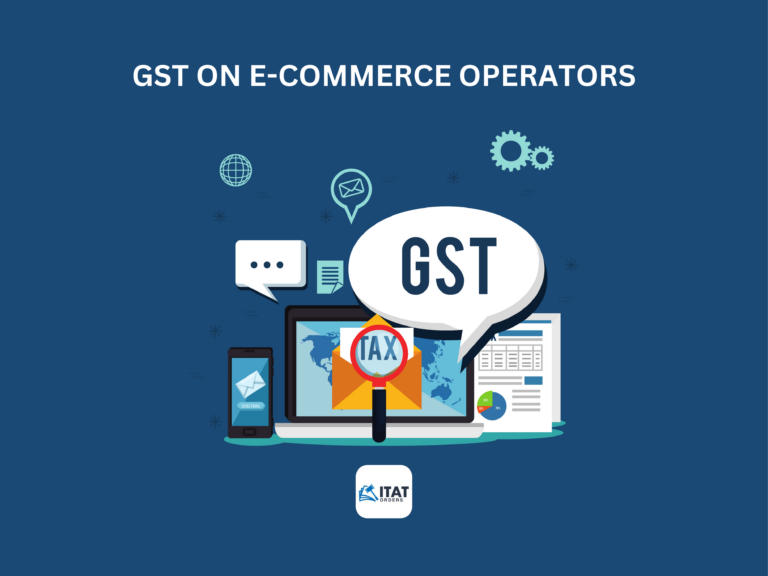
GST (Goods and Service Tax) has been imposed on supply of goods and services.
GST on E-commerce operators remains the same as any other mode of supplies
This article is helpful to those who want to start selling on e-commerce platforms out there and understand the GST requirements.
According to Section 2(44) of CGST Act, 2017 E-commerce means supply of goods or services or both through online mode i.e. using internet.
According to Section 2(45) of CGST Act, 2017 E-commerce operation means any person who owns and manages the online business either directly or indirectly i.e. using internet.
All the persons who manage/own business online are required to obtain GST registration irrespective of the value of supply made by them. In case of services notified u/s 9(5) of CGST Act, 2017 the e-commerce operator is liable to pay tax, on behalf of the suppliers. If such services are supplied through its platform, all the provisions of the Act shall apply to such e-commerce operator as if he is the supplier for this purpose. The process of Registration is as follows:
If the concerned person is not liable to deduct TDS or TCS anymore and it comes to the knowledge of the officer than where the total value of such supply, under an individual contract, exceeds Rs. 2,50,000.
E-commerce operator is liable to collect tax (Tax Collected at Source – TCS) from the supplier. The Tax Collected at source acts as a mechanism, wherein, the e-commerce operator collects the part of the tax when the supplier supplies the required goods or service through its portal where the total value of such supply, under an individual contract, exceeds Rs. 2,50,000.. TCS is deducted at the rate of 1% on the net value of the goods or services supplied through the e-commerce operator. The E-commerce operator should collect tax in respect of the supplies by such operator from customers and transfer it to actual supplier. Further, operator should remit to government before 10 days after the end of the month from the date on which the invoice is created.
The return of GST is to be filed by the E-commerce in Form GSTR – 8 every month within 10 days after the end of such month. Under this return, the details of outward supplies of goods and services made by sellers and amount of TCS collected are to be reflected. E-commerce operator is also required to file an annual statement by 31st day December following the end of the financial year in which the tax collected. The amount of TCS which is paid by the e-commerce operator to the government will be reflected in the Form GSTR-2 of the actual registered supplier (on whose account such collection has been made) on the basis of the statement filed by the e-commerce operator. The Government has notified following categories of services, tax on inter-state supplies/intra-state supplies shall be paid by ECO-
| S. No. | Description of supply of Service | Supplier of service | Person Liable to Pay GST | Notification No. |
| 1 | Transportation of passengers by a radio-taxi, motorcab, maxicab and motor cycle | Any person | E-commerce operator | Notification No. 17/2017-Central Tax (Rate) dt 28th June, 2017 Corresponding IGST Notification No. 14/2017-Integrated Tax (Rate) dt 28th June, 2017 |
| 2 | Providing accommodation in hotels, inns, guest houses, clubs, campsites or other commercial places meant for residential or lodging purposes | Any person except who is liable for registration under sub- section (1) of section 22 of the said CGST Act | E-commerce operator | –do– |
| 3 | Services by way of house- keeping, such as plumbing, carpentering etc | Any person except who is liable for registration under sub- section (1) of section 22 of the said CGST Act | E-commerce operator | Inserted vide Notification No. 23/2017-Central Tax(Rate) dated 22nd Aug, 2017Corresponding Notification No. 23/2017-Integrated Tax (Rate) dated 22nd Aug, 2017 |
Ans. Yes, it is mandatory for all the e commerce operators irrespective of sales turnover.
2. Can I sell online without GST?
Ans. There is a scheme called GST Composition Scheme. … In such platforms, you can sell online without GST only if you sell goods that are exempted
3. Who pays GST seller or buyer?
Ans. GST is paid by consumers but it is remitted by the businesses who sell goods or services.

I have read in a Book that “Buffett’s investment principles are “simple, old and few”. Most of his success came because of his personality, character, and willingness to learn from and teach others. Of his many outstanding qualities, the role as a teacher is the one for which he would most like to be remembered.”
Recently, I have made Warren Buffett my teacher, mentor and guide by reading, re-reading his quotes so that I can implement some bit of it in my life also, especially, in the journey of Financial Market.
Over his lifetime, he has experienced several bear market and has learned how to stay the course and stick to his investing principles, when other investors were selling or rethinking their strategies. Therefore, discipline is an essential element in becoming a successful long term investor. Some of his quotes have helped me become a more disciplined investor. Therefore, sharing some quotes which might help you as well:
1. In the business world, the rearview mirror is always clearer than the windshield.
American business will do just fine over time. And stocks will do well just as certainly, since their fate is tied to business performance. Periodic setbacks will occur, yes, but investors and managers are in a game heavily stacked in their favor. (The Dow Jones Industrials advanced from 66 to 11,497 in the twentieth century, a staggering 17,320% increase that materialized despite four costly wars, a Great Depression, and many recessions. And don’t forget that shareholders received substantial dividends throughout the century as well.)
2. Risk comes from not knowing what you are doing.
3. It’s better to hang out with people better than you. Pick out associates whose behavior is better than yours and you’ll drift in that direction.
4. Rule No. 1: Never lose money.
Rule No. 2: Don’t forget No. 1.
5. I will tell you how to become rich. Close the doors. Be fearful when others are greedy. Be greedy when others are fearful.
6. If you buy things you do not need, soon you will have to sell things you need.
7. Before looking at new investments, we consider adding to old ones. If a business is attractive enough to buy once, it may well pay to repeat the process.
8. The ability to say “no” is a tremendous advantage for an investor.
9. If you own See’s Candy, and you look in the mirror and say, “Mirror, mirror on the wall, how much do I charge for candy this fall?” and it says, “More,” that’s a good business.
10. If a business does well, the stock eventually follows.
11. The definition of a great company is one that will be great for 25 or 30 years.
12. Do not take yearly results too seriously. Instead, focus on four-or five-year averages.
13. What the wise do in the beginning, fools do in the end.
14. We always live in an uncertain world. What is certain is that the United States will go forward over time.
15. You can’t make a good deal with a bad person.
16. There are some parts of the game that we don’t understand, so we don’t play with them.
17. When you’re associating with the people that you love, doing what you love, it doesn’t get any better than that.
18. Great investment opportunities come around when excellent companies are surrounded by unusual circumstances that cause the stock to be misappraised.
19. I read annual reports of the company I’m looking at, and I read the annual reports of the competitors—that is the main source of material.
20. All there is to investing is picking good stocks at good times and staying with them as long as they remain good companies.
21. Diversification is a protection against ignorance. It makes very little sense for those who know what they’re doing.
A lot of great fortunes in the world have been made by owning a single wonderful business. If you understand the business, you don’t need to own very many of them.
22. If you are in a poker game and after 20 minutes you don’t know who the patsy is, then you’re the patsy.
23. It takes 20 years to build a reputation and five minutes to ruin it. If you think about that, you’ll do things differently.
24. Smile when you read a headline that says, “Investors lose as market falls.” Edit it in your mind to, “Disinvestors lose as market falls—but investors gain.” Though writers often forget this truism, there is a buyer for every seller and what hurts one necessarily helps the other.
25. I always knew I was going to be rich. I don’t think I ever doubted it for a minute.
26. The market, like the Lord, helps those who help themselves.
If “investors” frenetically bought and sold farmland to each other, neither the yields nor prices of their crops would be increased. The only consequence of such behavior would be decreases in the overall earnings realized by the farm-owning population because of the substantial costs it would occur as it sought advice and switched properties. Nevertheless, both individuals and institutions will constantly be urged to be active by those who profit from giving advice or effecting transactions. The resulting frictional costs can be huge and, for investors in aggregate, devoid of benefit. So ignore the chatter, keep your costs minimal, and invest in stocks as you would in a farm.
27. Beware of geeks bearing formulas.
28. The difference between successful people and very successful people is that very successful people say “no” to almost everything.
29. Do not save what is left after spending, but spend what is left after saving.
30. It’s a mistake paying attention to the day to day fluctuations of a stock —it makes no difference.

Making mistakes is part of the learning process when it comes to trading or investing. Investing is generally referred for a longer period of time. Traders generally buy and sell futures and options or shares for short duration which can be 1 minute also and 2-3 months.
Some types of trading are:
Mistake 1 – Trading is a Get Quick Rich Scheme
Many people believe that trading is scheme to become rich quickly. Think about it, if it was, everyone trading would already be millionaires. Trading is a skill and which takes time to learn. Skilled traders can and do make money in this field. However, like any other occupation or career, success doesn’t just happen overnight. Therefore trading without knowledge, skills, experience and practise has a direct relationship with losses.
Mistake 2 – Not having a Trading Plan
It’s a challenge to turn a profit through day trading, and although every day trader believes they can make money, most people who attempt day trading end up with a net loss because of poor money management rules, lack of discipline, risk management and emotions.
“Risk comes from not knowing what you are doing”
Experienced traders get into a trade with a well-defined plan. They know their exact entry and exit points, the amount of capital to invest in the trade and the maximum loss they are willing to take.
Beginners tend to lose money because they may not have a trading plan and a big sign that you don’t have a trading plan is not using stop-loss orders and common trading mistake is when a trader cancels a stop loss order on a losing trade just before it get triggered because they believe that the price trend will reverse.
Mistake 3 – Poor Money management skills
Money management looks so simple but it has many aspects relating to it. Money management includes
Not following abovementioned money management skills will lead you to more and more losses and will bring an end to your trading career.
Mistake 4 – Never gamble on events
Gambling on events is not always a good idea.
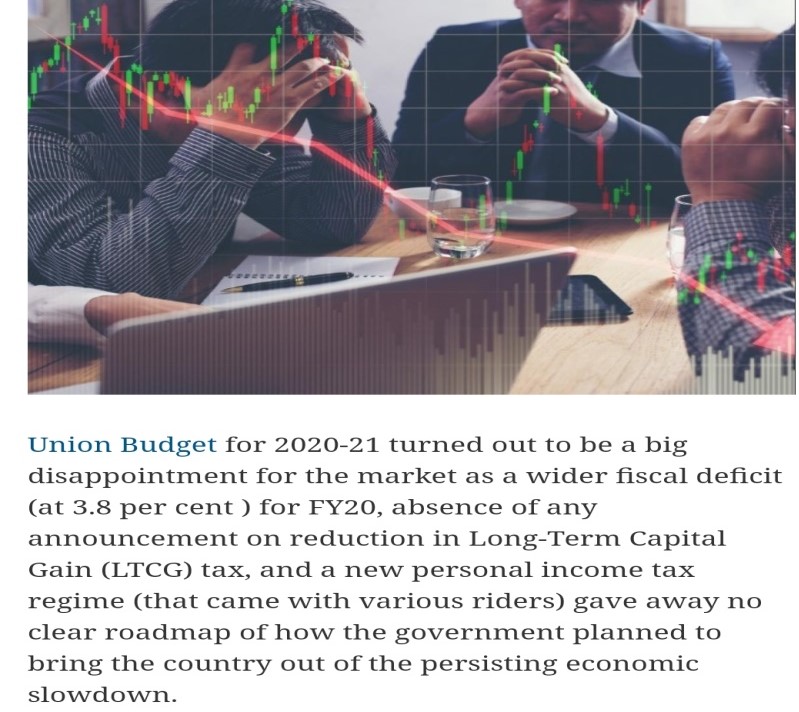
For example: Budget 2020 has created lots of expectations around the country that government will bring in various reforms and plans to boost the economy and market also had various expectations some of them are like reduction of long term capital gain, Removal of Dividend Distribution tax and many more. So, the stocks which might can get boost by the actions of government were already valued accordingly before the event. However, the event didn’t go as expected and had adverse effect on the market.
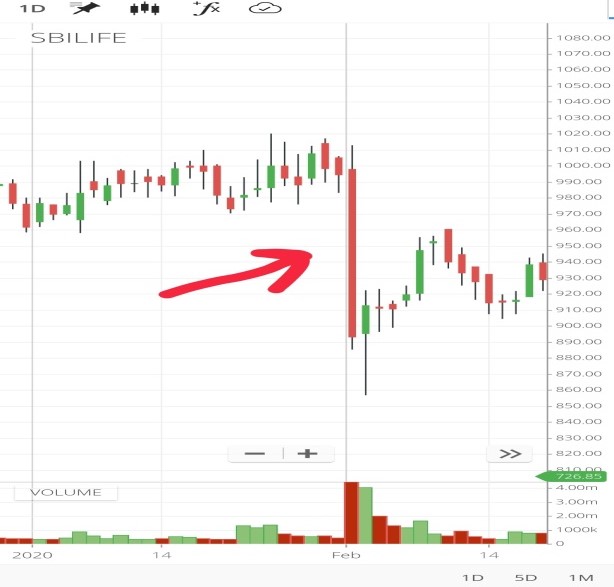
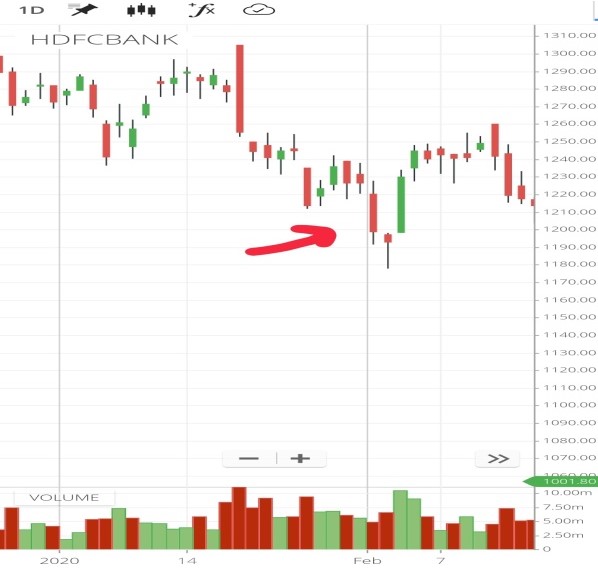
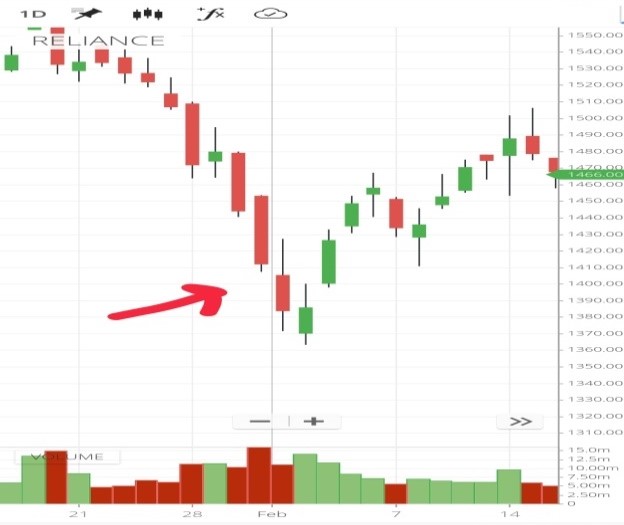
These are the images of Share price of Reliance, HDFC Bank and SBI Life Insurance of the budget day of 2020. SBI Life insurance crashed 10% in minutes just because it was expected that the limit of deduction u/s.80C will be increased and insurance companies will benefit from it. However, when such expectations didn’t fulfill the share prices of Life insurance companies crashed 10% in just few minutes.
Mistake 5 Tip based trading
Nowadays, Tip based trading is getting very popular. There are so many channels on telegram for share market tips and many beginners who want to enter in share market tend to follow such tips. There might be certain good advisors also. However, following the free tips of advisors without applying your mind and by showing blind trust on some advisors will only lay off your capital in some duration. Because while following the tip there is general belief that these tips are from someone who is more experienced than us. Further, late replies or no reply from advisors can also lead to huge losses.
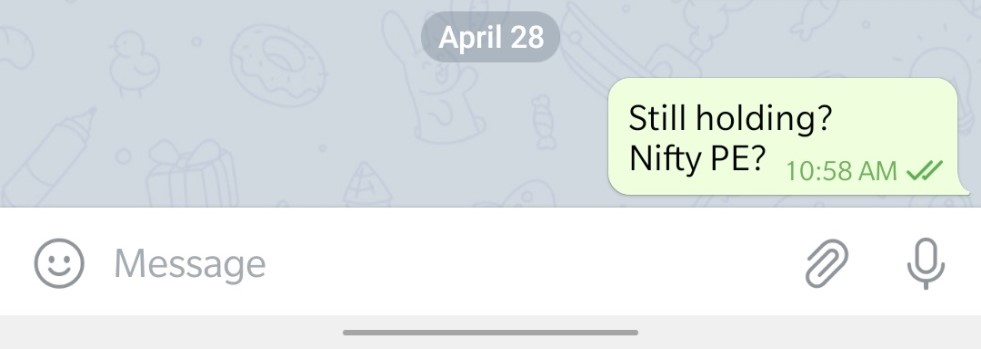
Therefore, it is advisable to be cautious while following any tips.
Conclusion:
During the journey of my trading, I kept my trading journal and noted some mistakes from every trade. We must identify the mistakes and learn from it otherwise it will not take much time to end up in losses. It is said that if you learn from your mistake then it is worth doing.
Identifying these mistakes have helped me to plug the loopholes and manage my capital in a more better way.
Since the beginning of the year 2020, the economy has gone through major historic events whether it be the death of NBA legend Kobe Bryant, the spread of coronavirus, the impeachment trial of USA president, and other nation wise events.
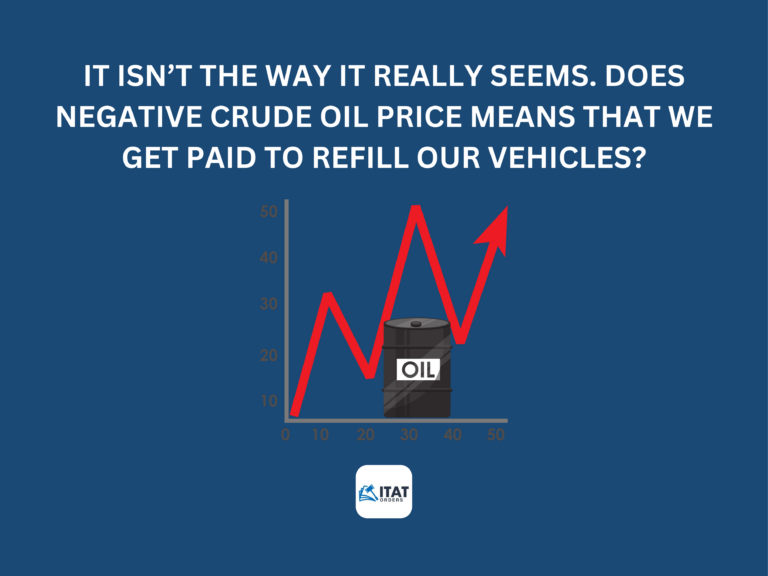
21st April, 2020 was one such historical moment for the world. On one hand, where everyone is fighting against coronavirus, the prices of the WTI crude oil had fallen to negative $37 per barrel.
Whether we as an individual be benefitted from the news of negative crude oil price or does it put the economy in a disadvantageous position?
First, let us understand what is “Negative crude oil price”.
We often think that the major factors for determining the price of any commodity is the market’s “demand” and “supply”. The same is prevalent in the case of WTI crude oil. However, in this case another major factor that has affected the price is “storage capacity”.
To buy any commodity, an individual has an option either to buy at the current market price or at a predetermined rate in future month by entering into a futures contract. A person enters into a future contract either to hedge their risk through taking physical delivery of the commodity in the future month but at an agreed rate or to speculate in commodity by making cash settlement which does not include physical delivery.
The problem occurred when the demand for crude oil decreased (due to coronavirus) so much that there was no buyer on the other hand. And the speculators, who aimed at settling the financial difference between the buying price and the settlement price, had no other option than to take physical delivery of the May contracted oil. The speculator may not have a refinery or storage facility where crude oil could be stored. So now even if the speculator takes the delivery, where will they store the barrels of oil? This is where the factor of storage has taken the front seat and became a driving force behind the pricing of crude oil futures.
The speculators had to pay someone to store the barrels of oil until the demand for the same is increased. Therefore, making payments to take oil has led to a negative oil price. If the speculators had proper storage capacity, then the economy would have never seen such type of situation.
All this transaction has taken place between the producers and the intermediaries which will not affect the end customer.
Therefore, we individual consumers aren’t going to be benefitted from this transaction.
Now let’s see how will this affect the Indian economy.
There are three benchmark oils depending on their quality and location – Brent, WTI, and Dubai/Oman. India is one of the biggest importers of crude oil and cooking gas which is supplied from diversified sources. India imports Brent oil from Iraq and Saudi Arabia, which is the main source of supply.
The decrease in WTI crude oil price shall have a low impact on the Indian economy as India is not a major importer of WTI crude oil. Also, the negative price of WTI crude oil was only for May Future contract, the June delivery futures are still trading in positive territory at $20+/BBL.
How does this situation affect the environment?
Negative oil price means that US crude oil producers are not facing a glut and if they don’t stop drilling, they will have to give the oil away free and/or pay people to buy that oil. If this oil could not be sold, then they may opt for dumping or disposal. However, this will cause an environmental disaster and result in billions of dollars of penalty.
It is always said that excess of anything is dangerous. Hence proved!.
ITATorders.in is India's only Income Tax Research Tool giving access to repository of more than 3 lakh Income Tax Tribunal Judgements. ITATorders.in Blog site provides analysis based on these judicial precedents
Copyright © 2023 All rights reserved | Crafted Mindfully at 
 +91 97234 00220
 support@counselvise.com